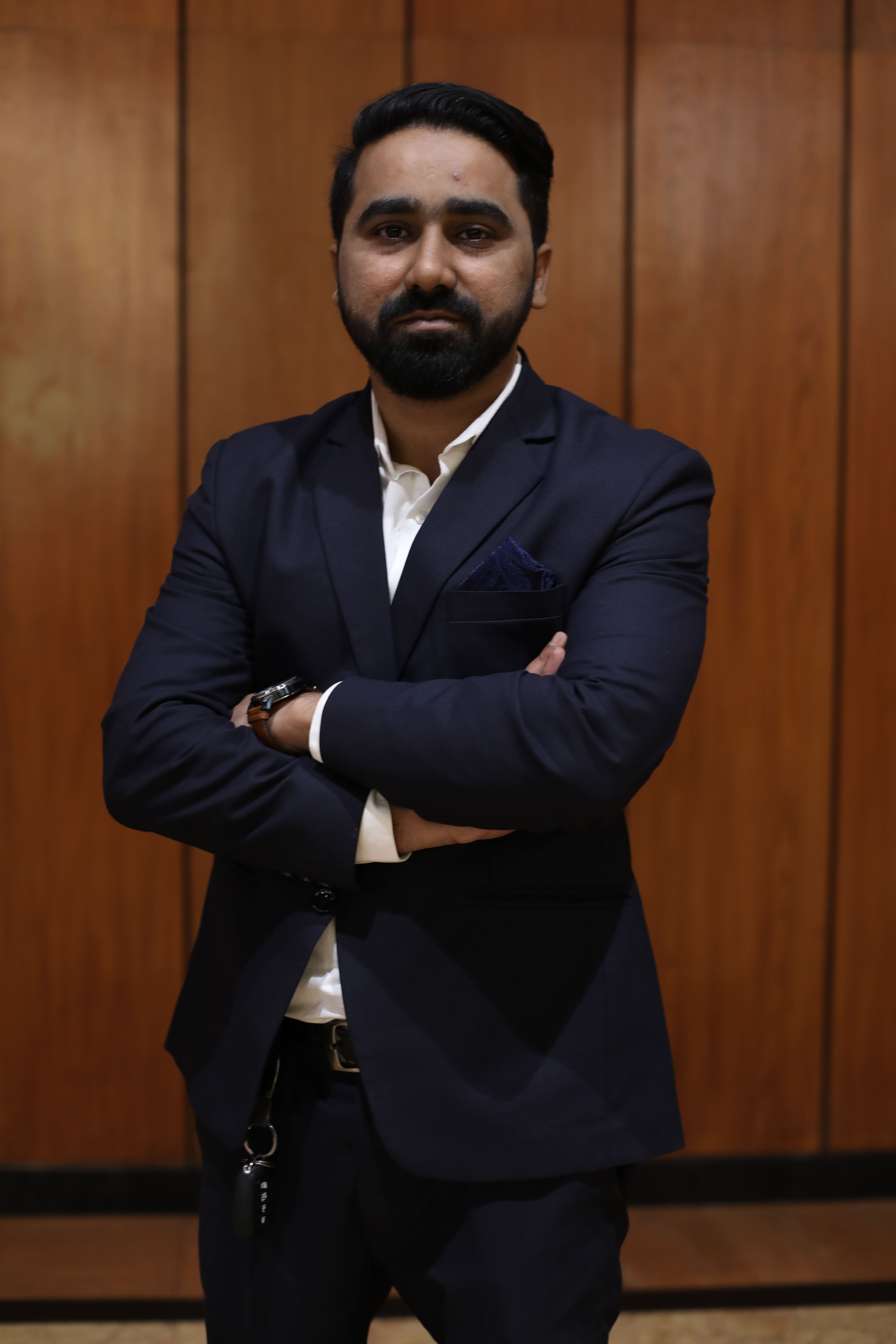
Mohd Aadil Siddiqui
July 16, 2026
.png)
Mohd Aadil Siddiqui
Most leaders are not thinking about project plans or schedules. The question they wake up to is far simpler.
Will the project finish on time?
And despite detailed planning, constant reviews, and better tools, the answer is often uncertain.
Projects are not late because people are careless or not working hard enough. They are late because of how execution actually unfolds. In complex environments with multiple stakeholders, limited resources, and frequent disruptions, work does not flow smoothly from start to finish. It starts, stops, waits, and gets reworked. Over time, these interruptions accumulate and delay the project.
In most projects, everything appears reasonable in isolation. Plans are well thought through, responsibilities are defined, and teams are working continuously. Yet the outcome is inconsistent.
The reason lies in how progress is measured. Most organizations track activity. Drawings issued, materials dispatched, work started, meetings completed. Each of these creates a sense of movement. But projects do not finish based on activity. They finish based on the steady conversion of work from not done to done.
When work keeps getting interrupted, even strong individual efforts do not translate into overall progress. Flow weakens, and timelines stretch without a clear reason.
The natural response to delays is to tighten control. Create more detailed plans, increase coordination, track progress more frequently, and respond faster to deviations.
This approach appears logical, but in practice it leads to a reactive system. Plans are constantly adjusted, priorities keep shifting, and teams spend more time coordinating than executing. Even with better data and visibility, a large majority of projects continue to miss their timelines.
The issue is not the absence of planning. It is the absence of a system that protects the flow of work during execution.
Critical Chain Project Management, based on the Theory of Constraints, starts from a different premise. Instead of improving every part of the project independently, it focuses on the chain of dependent work that actually determines the project duration.
At any point, there is only one sequence of tasks that truly governs completion. This sequence is constrained not just by work dependency, but also by resource dependencies. If this chain flows without interruption, the project moves faster. If it stops, no amount of local efficiency elsewhere can compensate.
Critical Chain does not try to control everything. It changes a few fundamental aspects of execution that have a disproportionate impact on timelines.
One of the first shifts is reducing the tendency to start more work. In many projects, starting early is seen as progress. In reality, work remains open for longer, coordination increases, and completion gets delayed. Speed comes from finishing work, not opening more fronts.
Another important shift is around readiness. Work often begins before drawings are stable, materials are available, or decisions are fully aligned. This leads to interruptions, rework, and constant firefighting. Critical Chain introduces a simple discipline: do not start until the work is fully ready. When execution begins with clarity, it proceeds with far fewer disruptions.
The approach also changes how uncertainty is handled. Uncertainty is not treated as an exception but as a normal part of execution. Instead of adding safety to every task, protection is built into the system through buffers placed at the end of the chains. This allows teams to absorb disruptions without losing overall control of timelines.
Finally, resource allocation is handled differently. Instead of spreading resources across multiple parallel tasks, Critical Chain concentrates them to complete selected work quickly. This reduces multitasking, simplifies priorities, and improves flow.
In real project environments, especially those involving shutdowns, expansions, or large installations, multiple teams operate with their own plans and priorities. Shared resources become bottlenecks, and coordination effort increases every day.
Under a Critical Chain approach, execution becomes more aligned. Work is released only when it is ready. Resources are directed to a smaller number of active tasks. Teams focus on finishing rather than juggling multiple activities. Progress is not tracked through how much has started, but through how consistently work is getting completed.
Over time, the system stabilizes. Interruptions reduce, coordination becomes simpler, and the project begins to move with a steady rhythm.
The changes are simple, but they go against deeply held beliefs. There is a natural tendency to start early, to keep everyone busy, and to believe that tighter control will solve delays.
Critical Chain challenges this. It shifts attention from activity to completion, from starting to finishing, and from local efficiency to overall flow. This requires a change in how progress is understood and how decisions are made during execution.
When these principles are applied consistently, the impact is visible. Projects begin to move faster, not because teams are working harder, but because interruptions reduce and priorities become clearer.
Organizations often see:
These outcomes are not driven by additional resources or more detailed planning, but by improving how work flows through the system.
Projects are not late because planning is weak. They are late because execution is fragmented.
When the focus shifts from managing activity to enabling uninterrupted flow, the system behaves differently. Work moves with less friction, teams align more naturally, and timelines become achievable.
At that point, something fundamental changes.
The date starts moving.
Read more articles:
Why projects are late even when everything seems managed?
Beyond fragmentation: Toyota's cell manufacturing model offers a blueprint for construction
What if our best attempts to minimize time and cost overruns in projects are pointless?
How can we solve the late project problem
Implementing critical chain in large infrastructure projects
Part 1: Why critical chain is not a science


Our Customer Service Teams have hundreds of Industry specific studies to draw from ... get in touch if you want to see something specific to your needs, or simply explore how we can deliver Radical Results for you.


